Urban Heat
Temperature Analysis
Social Housing
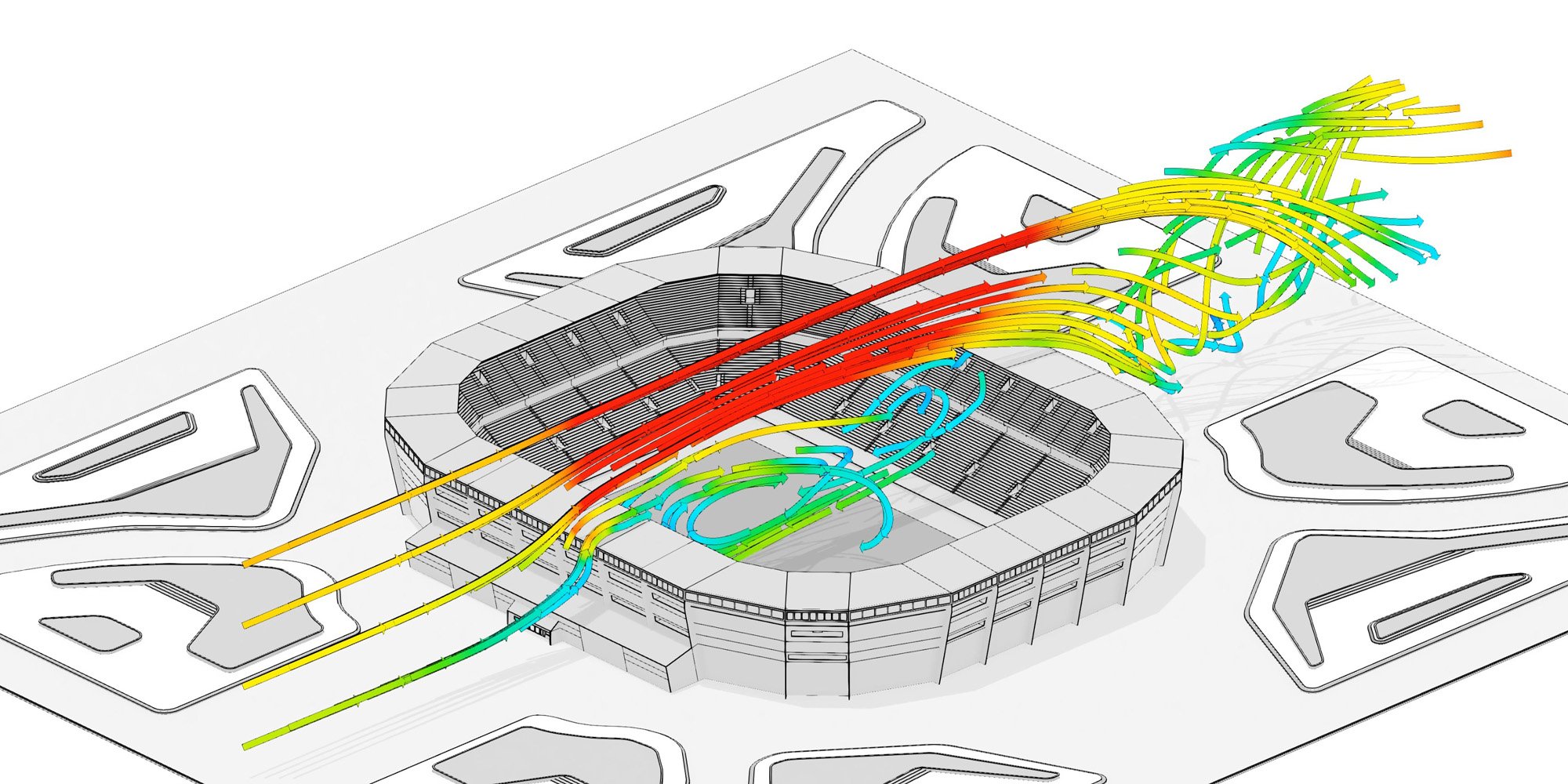
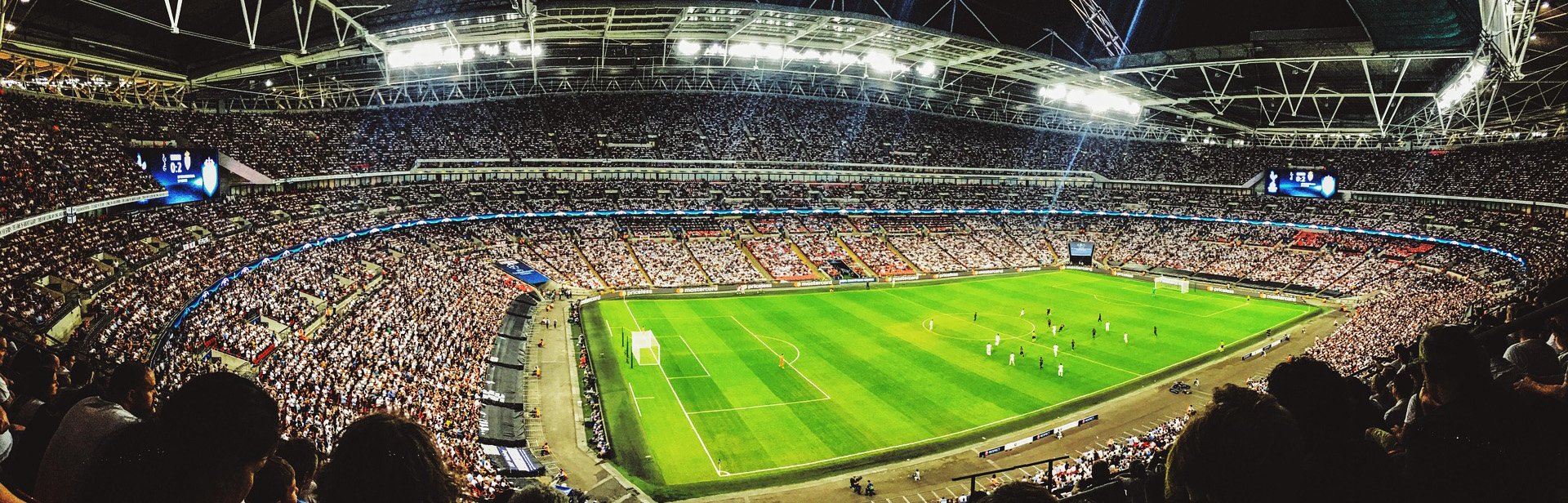
Australia’s sporting culture thrives in outdoor environments, but designing stadiums that deliver comfort for players and spectators is far more complex than simply delivering seats around a field. With climate variability—from scorching summers to cool winters—stadium design must integrate strategies that respond to local conditions, ensuring comfort inside the venue and throughout the surrounding precinct.
Why Climate-Responsive Design Is Critical
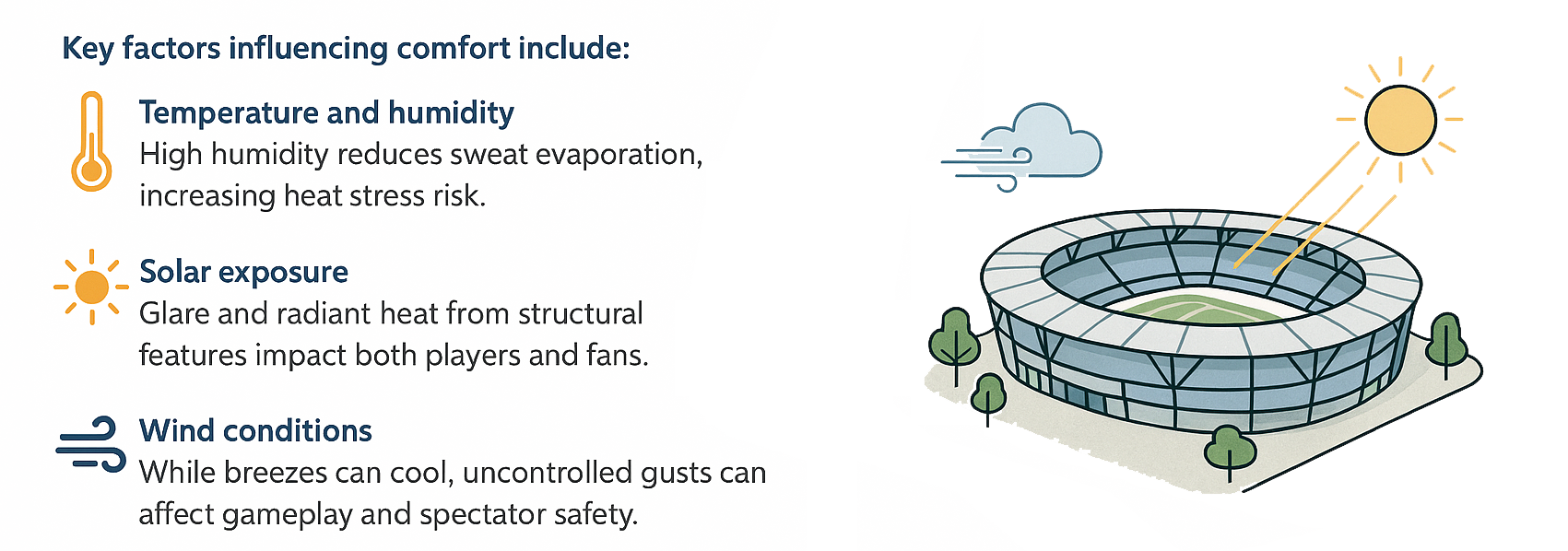
Thermal comfort affects not only the fan experience but also athlete performance. Excessive heat can lead to dehydration and heat stress, while strong winds can disrupt play and diminish spectator enjoyment. Stadiums are no longer just venues; they are multi-use precincts hosting events year-round. This makes climate-responsive design a necessity, not a luxury.
 The Australian Context
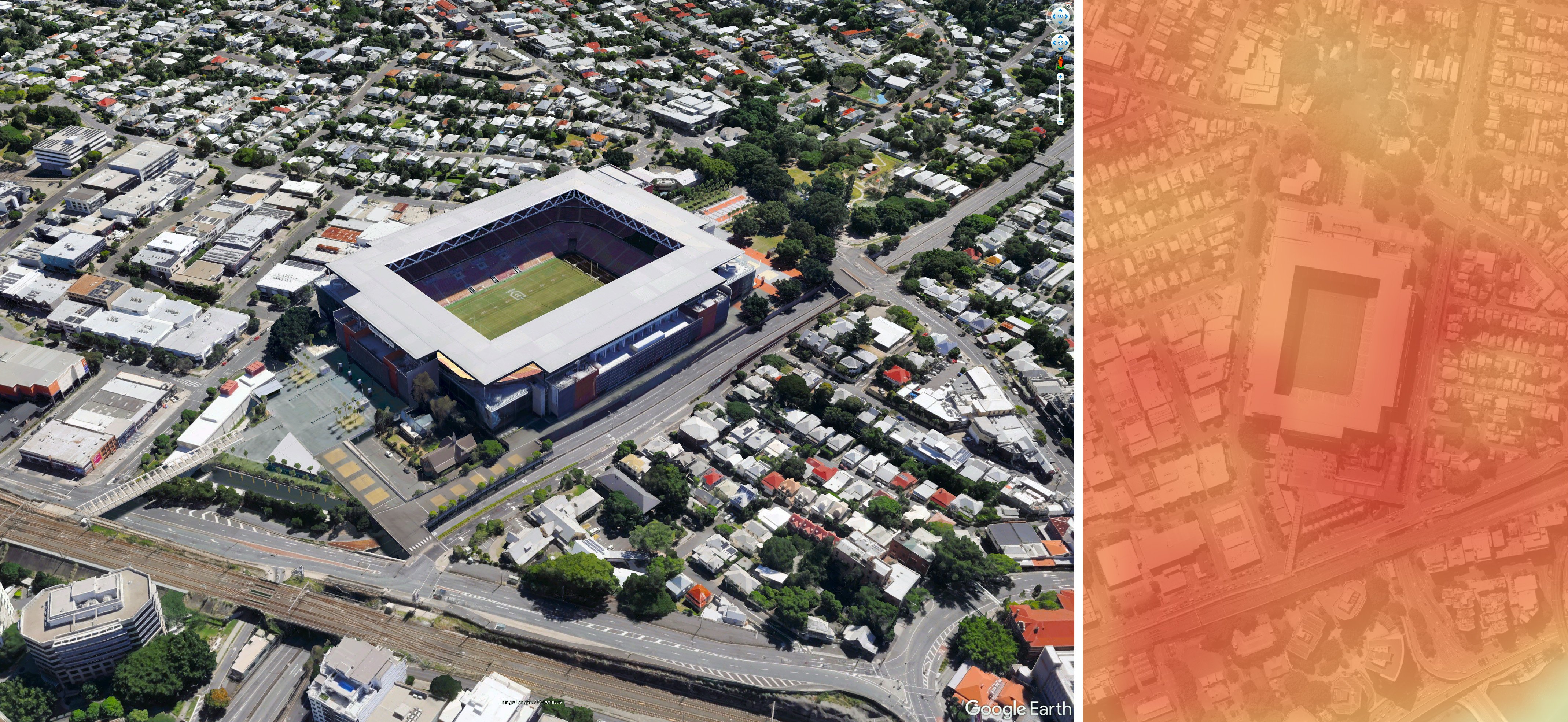
A review of several existing stadiums and sports fields show that each sports facility enjoys different levels of amenity and thermal comfort. The image below shows Suncorp Stadium in Brisbane and the associated land surface temperature overlay provided by the U.S. Geological Survey www.usgs.gov.au for the 21st of December 2024.
Milton
Whilst the playing field appears relatively cool, higher areas of heat loading are present along the Eastern and Southern external facades of the structure including the queuing areas adjacent to the main entry.
A review of multiple surface temperature images from different months and years, confirm that the heat on the southern side of the facility is present during most seasons, however the playing surface remains relatively cool.
Tactical design and testing of additional green elements in this location would likely improve the thermal performance of the space. The location of large tree species should also be done in a way that funnells air to places within the precinct which require additional heat reduction.
 Kelvin Grove
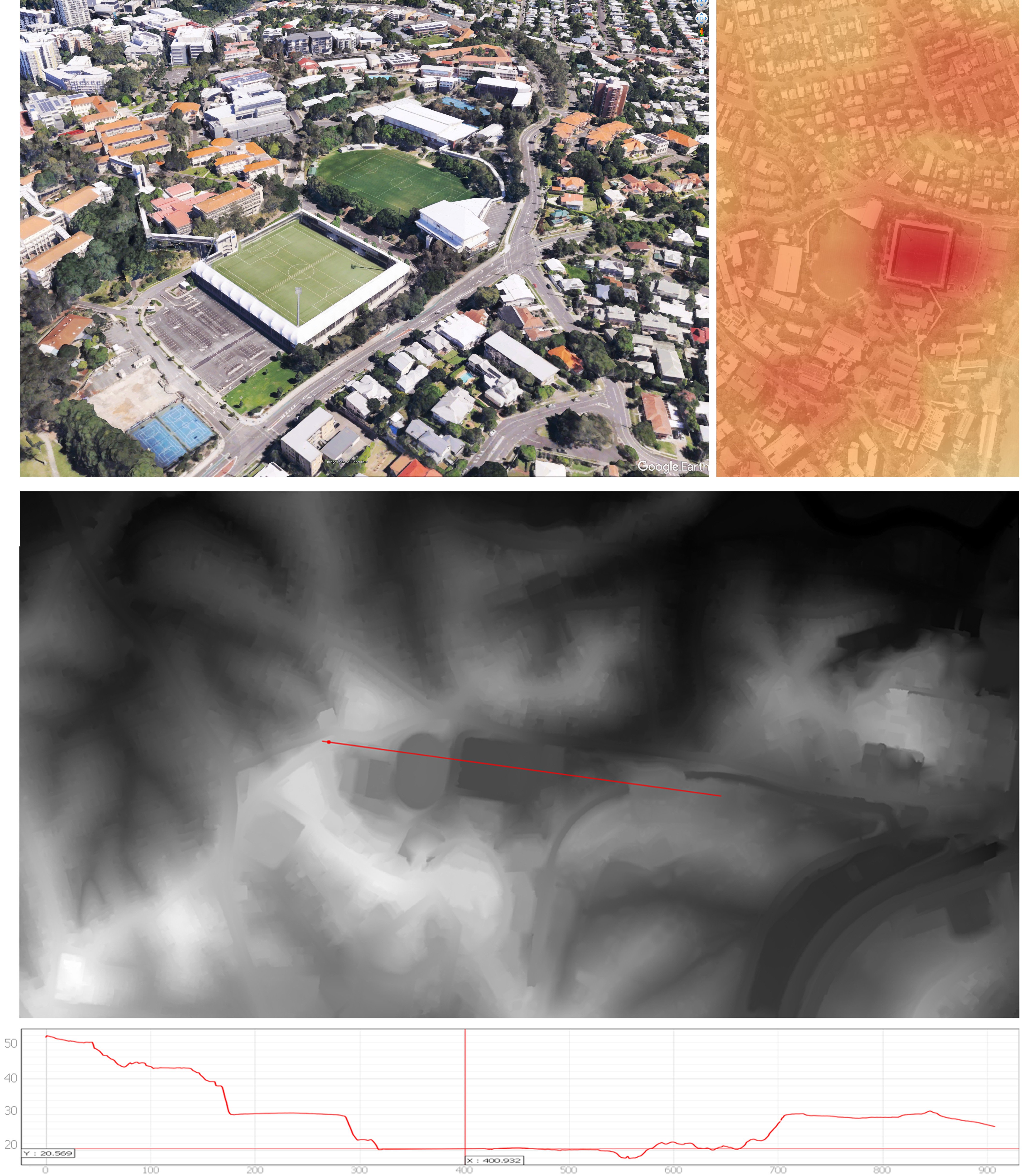
The image below shows the playing fields within the QUT campus of Kelvin Grove. A review of surface temperatures across a range of months confirms that the playing pitch on the eastern side is significantly warmer than the adjacent oval.
This is likely due to a combination of factors including the type of ground covering used for the pitch and the design of the wall and roofing structures. The relative elevation of surrounding landforms are also likely reducing the sites access to breezes. In the image further below, a terrain map can be seen showing the relative elevation of the ground along the red cross section line. The plan shows that field is in one of the lowest parts of the area including the adjacent Victoria Park.
Whilst the temperature of the field is quite warm, comfort could still potentially be achieved if breezes are able to be provided consistently over the surface for the benefit of players. Mechanical ventilation including misters could also be used to cool people and surfaces through enhanced evaporation rates.
Standards and Metrics for Comfort Testing
The Urban Vector team recommends applying internationally recognized standards through the design and concept development stages of any stadium project. Specifically, some of these include:
Australian Standards Requirements
The Australian Bureau of Meteorology (BOM) provides Thermal Comfort Observations, which include WBGT values in both sun and shade, alongside apparent temperature, humidity, and wind conditions. These measurements are crucial because WBGT captures the combined effects of temperature, humidity, wind, and solar radiation, offering a more accurate reflection of heat stress than air temperature alone. Sports bodies such as Sports Medicine Australia use this BOM data to power tools like the Sports Heat Tool, which translates WBGT readings into real-time risk ratings and recommended safety actions for athletes, coaches, and event organisers.
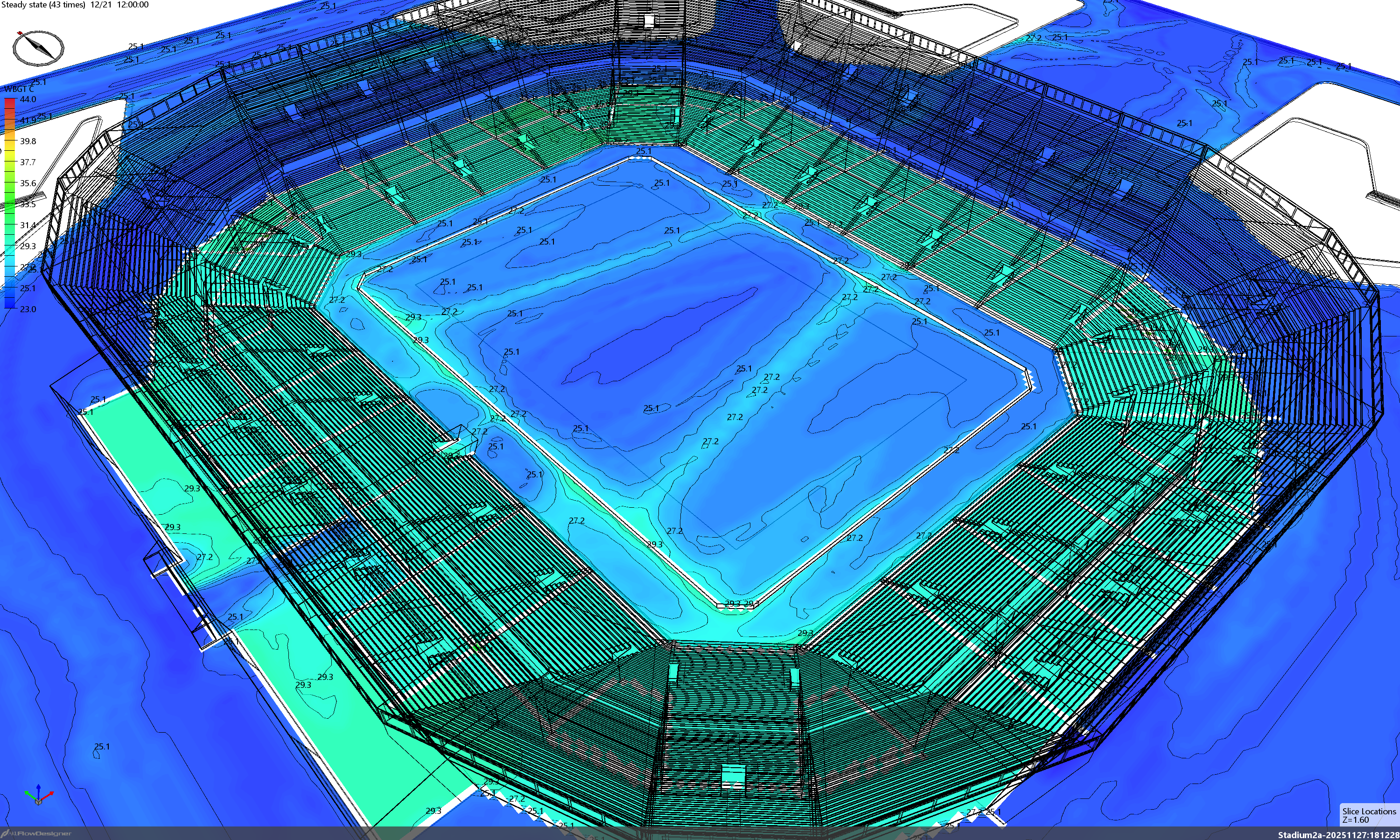
This is why Urban Vector uses systems which natively assesses WBGT and can test multiple design iterations against any climatic condition in a short amount of time. The image below shows that based on a cool summer day on the 21st of December with a breeze coming from the East, that the design of a typical stadium achieves a positive score in terms of WBGT.
As can be seen in the image below the average WGBT score achieved by the playing field is 26.5deg C. However, it is worth noting that the actual surface temperature of the playing field can change the thermal performance of the facilitity. Accordingly, if comprehnsive irrigation procedures are followed, the evaporation from the ground can greatly reduce heat. For this simulation the performance of recently watered soil has been used and has greatly improved the WBGT performance.
Forward: A Holistic Approach
Comfort in stadium design is not just about mechanic systems or roof geometry—it’s about creating a climate-responsive ecosystem:
As Australia continues to invest in world-class sporting infrastructure, embedding these principles will ensure venues remain sustainable, inclusive, and enjoyable—whatever the weather.