Urban Heat
Temperature Analysis
Victoria Park
As climate change accelerates, heat is emerging as one of the most pervasive and underestimated threats to urban environments. It affects everything—from public health and energy demand to biodiversity and social equity. Yet despite its significance, temperature is rarely treated as a core design parameter in new developments.
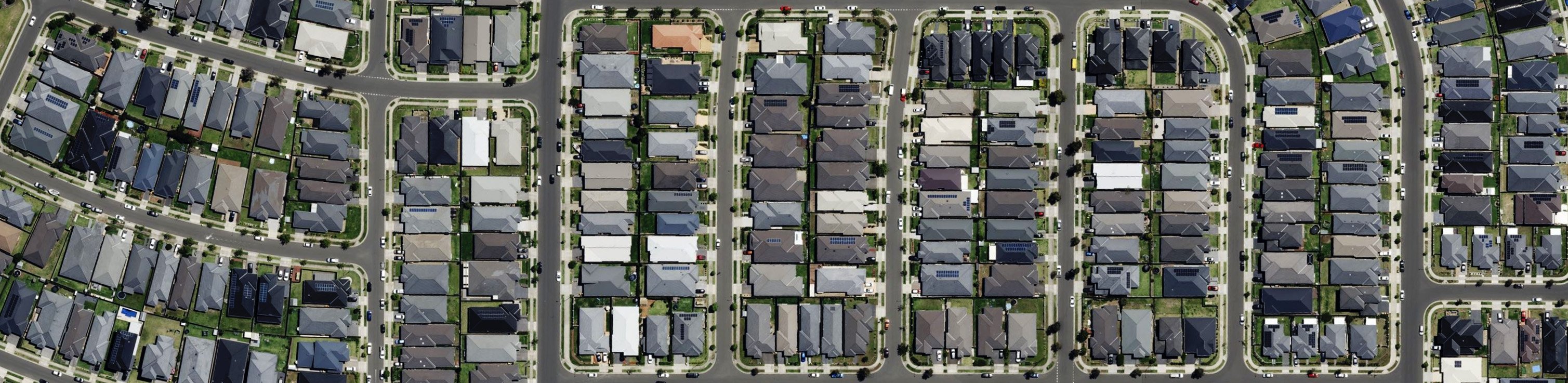
This oversight is particularly acute in small lot housing, where compact urban forms and limited green infrastructure can amplify heat exposure. Understanding both surface and air temperature dynamics is essential for building cities that are not only livable today, but resilient tomorrow.
 Why Temperature Matters
Temperature is more than a weather metric—it’s a proxy for urban performance. It influences:
Despite these impacts, most developments proceed without a clear understanding of how design choices influence thermal conditions.
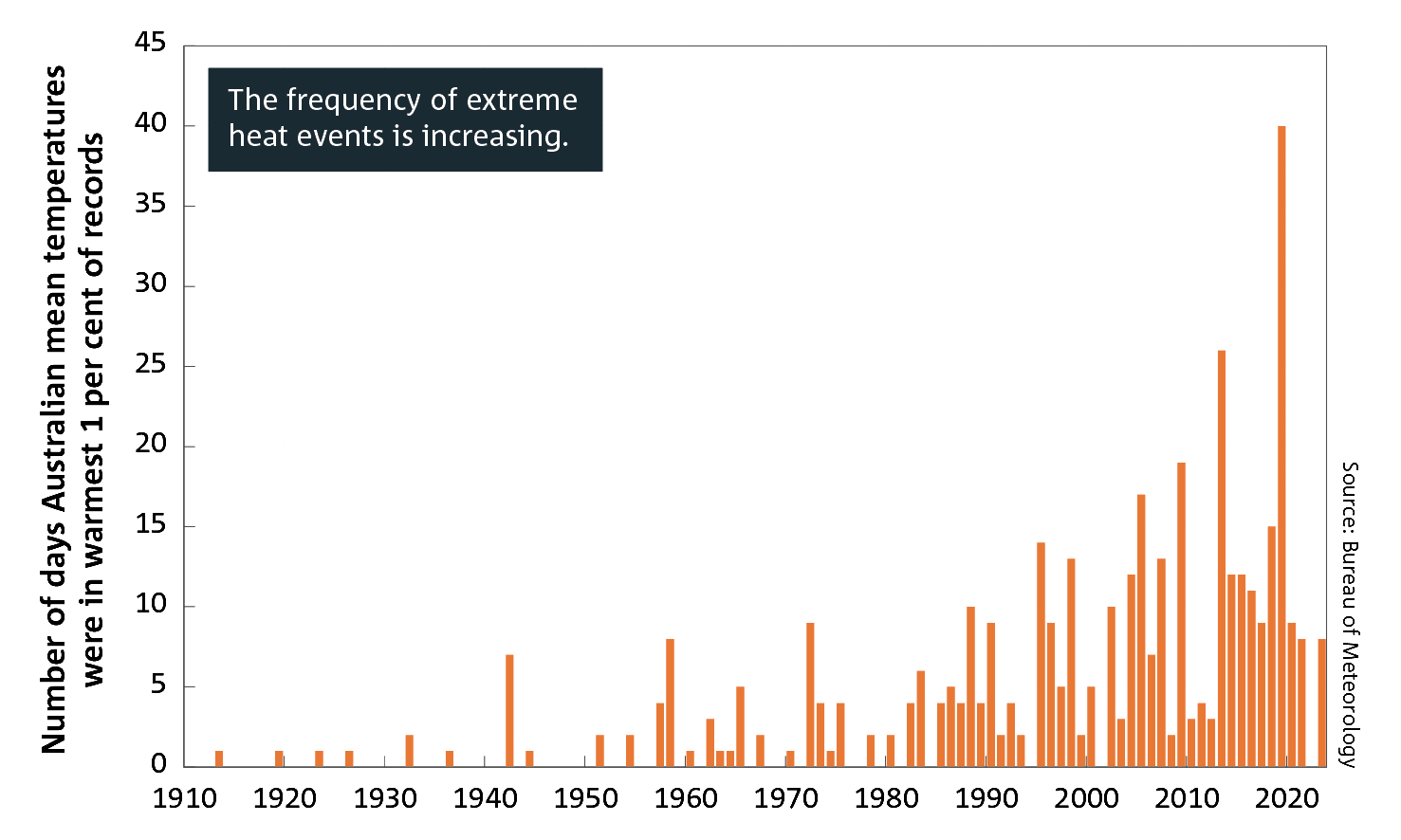 The Data Gap in Design and Planning
Currently, it is uncommon for architects, planners, and developers to assess surface and air temperatures in new projects. This is due to:
The result is a blind spot in urban design—one that leaves communities exposed to avoidable heat risks.
Insights from the National Climate Adaptation Plan
Australia’s National Climate Adaptation Plan (2023) highlights the need for proactive climate resilience across sectors. Key recommendations relevant to temperature analysis include:
These priorities align with the need to incorporate temperature metrics into urban development—especially in small lot housing, where thermal risks are often highest.
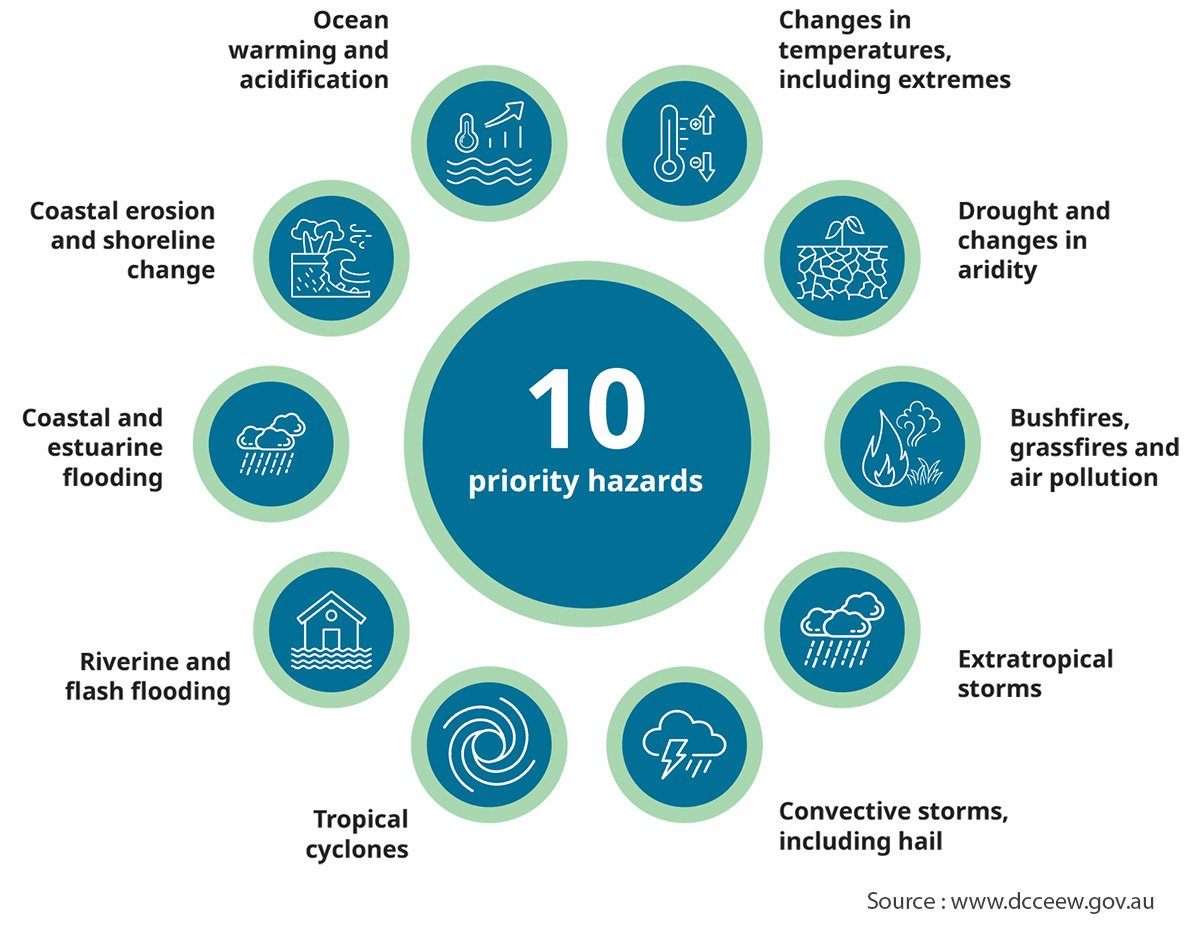
The 10 priority hazards identified in the National Climate Risk Assessment
Small Lot Housing: A Heat Risk Multiplier
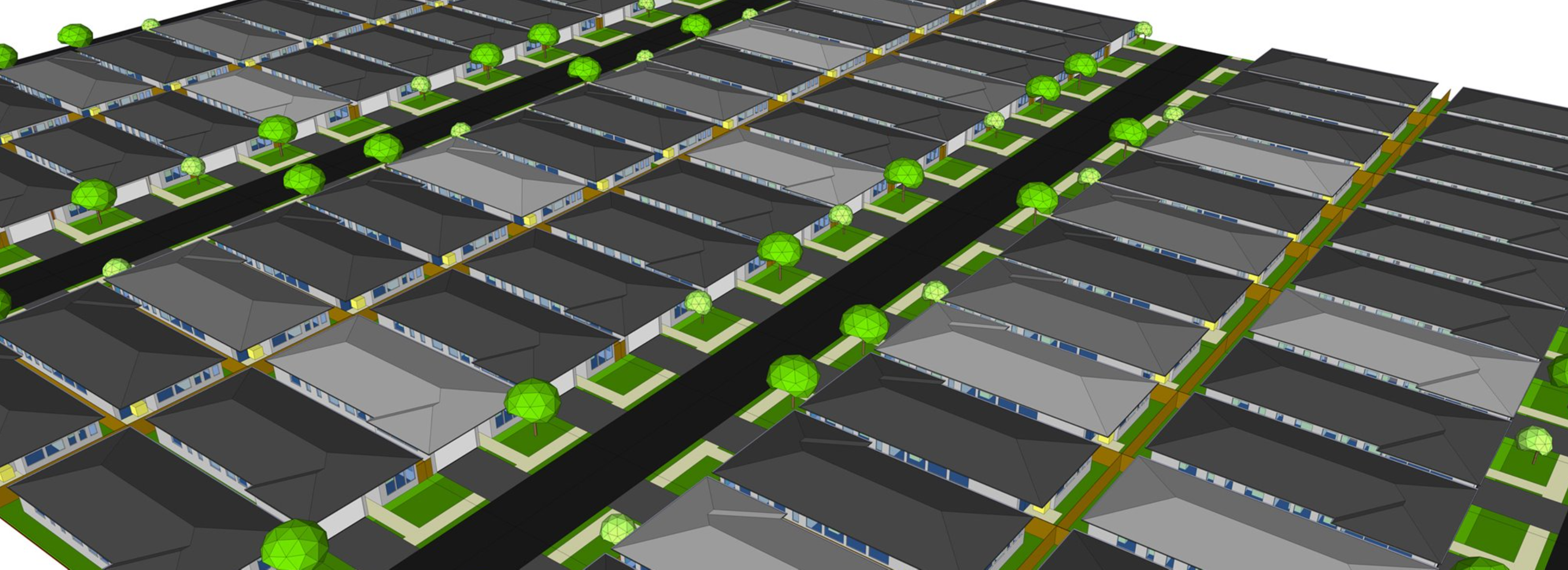
Throughout Australia a number of new housing innovations continue to be delivered and tested in emerging communities and in suburbs experiencing redevelopment. Some of the more topical housing forms are the 'small lot' housing products which are typically built on 200m to 400m lots and can include terraces, duplexes and detached housing forms.
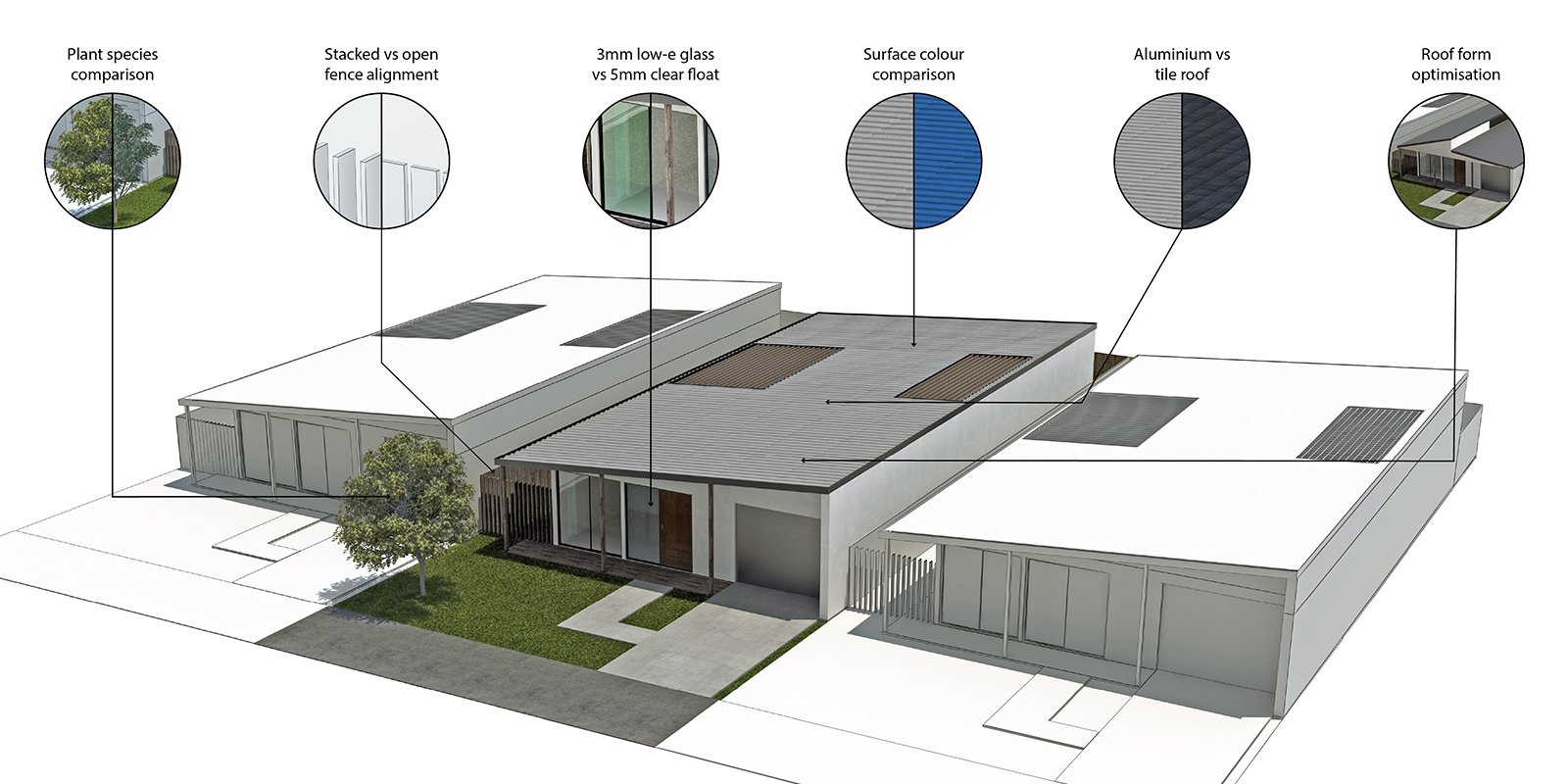
The thermal performance of small lots is impacted by a range different design considerations which can be tested and optimised through advanced simulation processes. The follow are key matters which relate specifically to heat and small lots.
These factors combine to create microclimates that are significantly warmer than surrounding areas. Without temperature analysis, these risks remain invisible until they manifest as discomfort, illness, or strain on supporting infrastructure.
The Role of Simulation and Measurement
To address these challenges, urban designers need tools that can:
Such capabilities enable evidence-based design decisions that prioritize health, equity, and resilience.
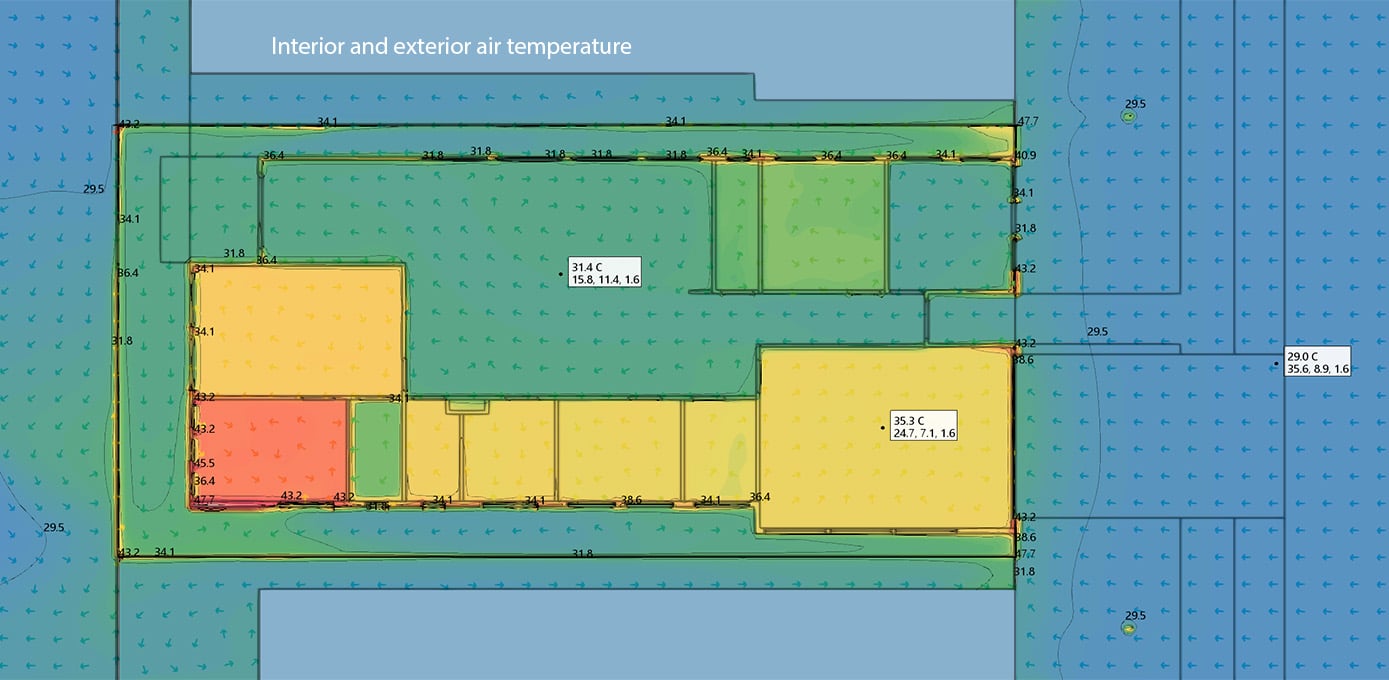
Figure 1: Analysis showing the surface temperature of a small lot home. Both the interior of the building (all rooms and walls) as well as the exterior are determined. 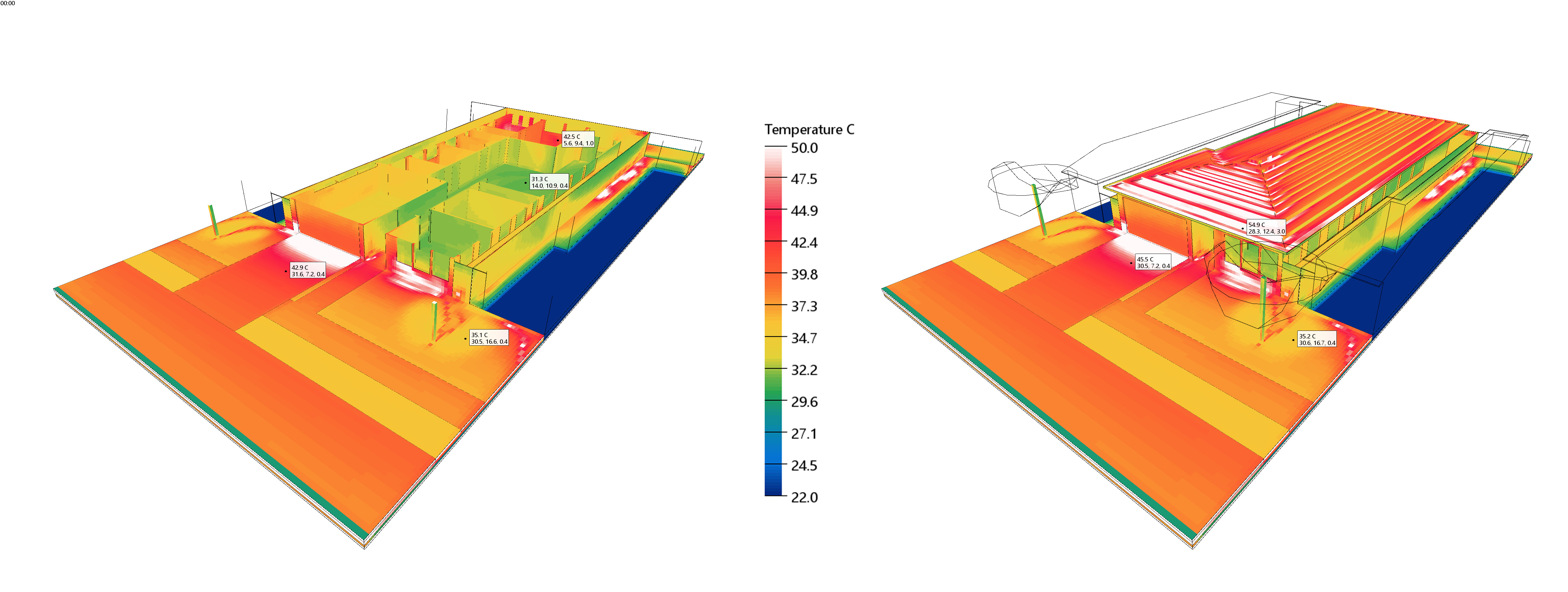 Figure 2: Analysis showing the internal air temperature of the same small lot home. All internal spaces including rooms, ceiling spaces, and windows are considered in the analysis.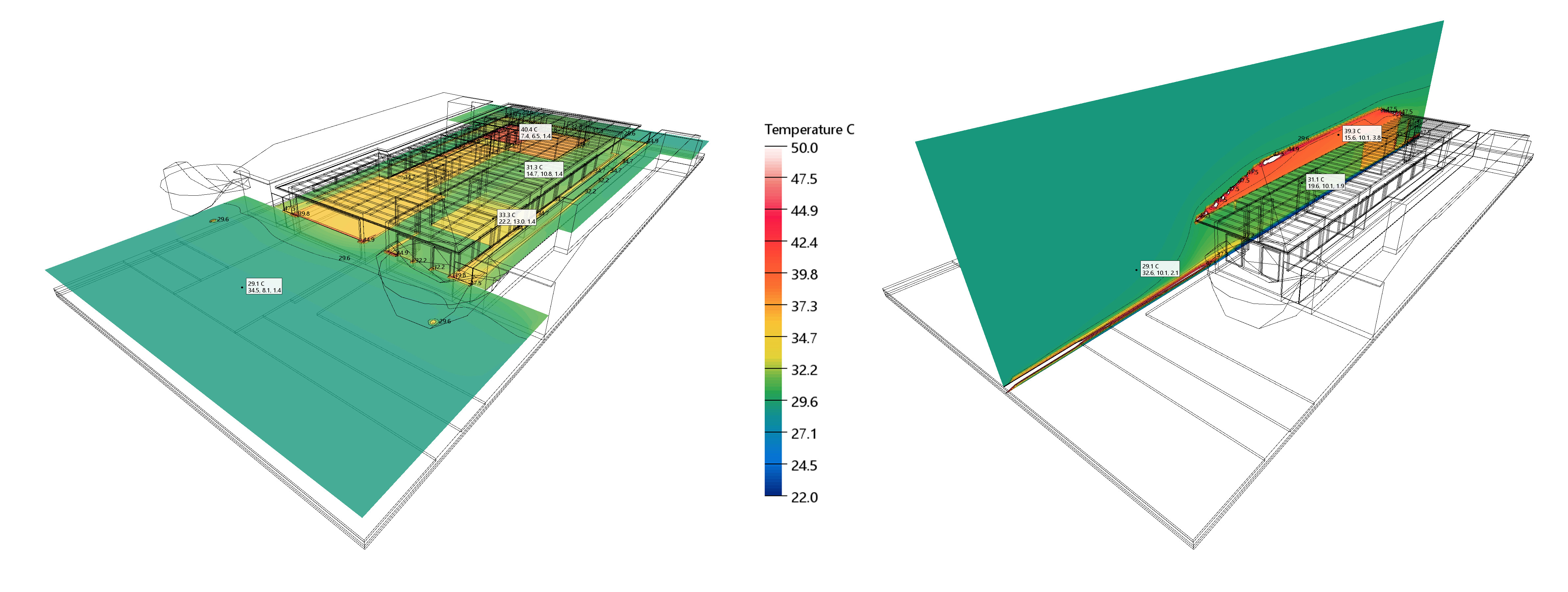
Urban Vector: Bridging the Gap
At Urban Vector, we specialize in helping architects, landscape architects, planners, engineers and urban designers integrate temperature analysis into their workflows. Our platform and expertise allow professionals to:
By making temperature visible, we empower design teams to create environments that are cool, comfortable, and future-ready.
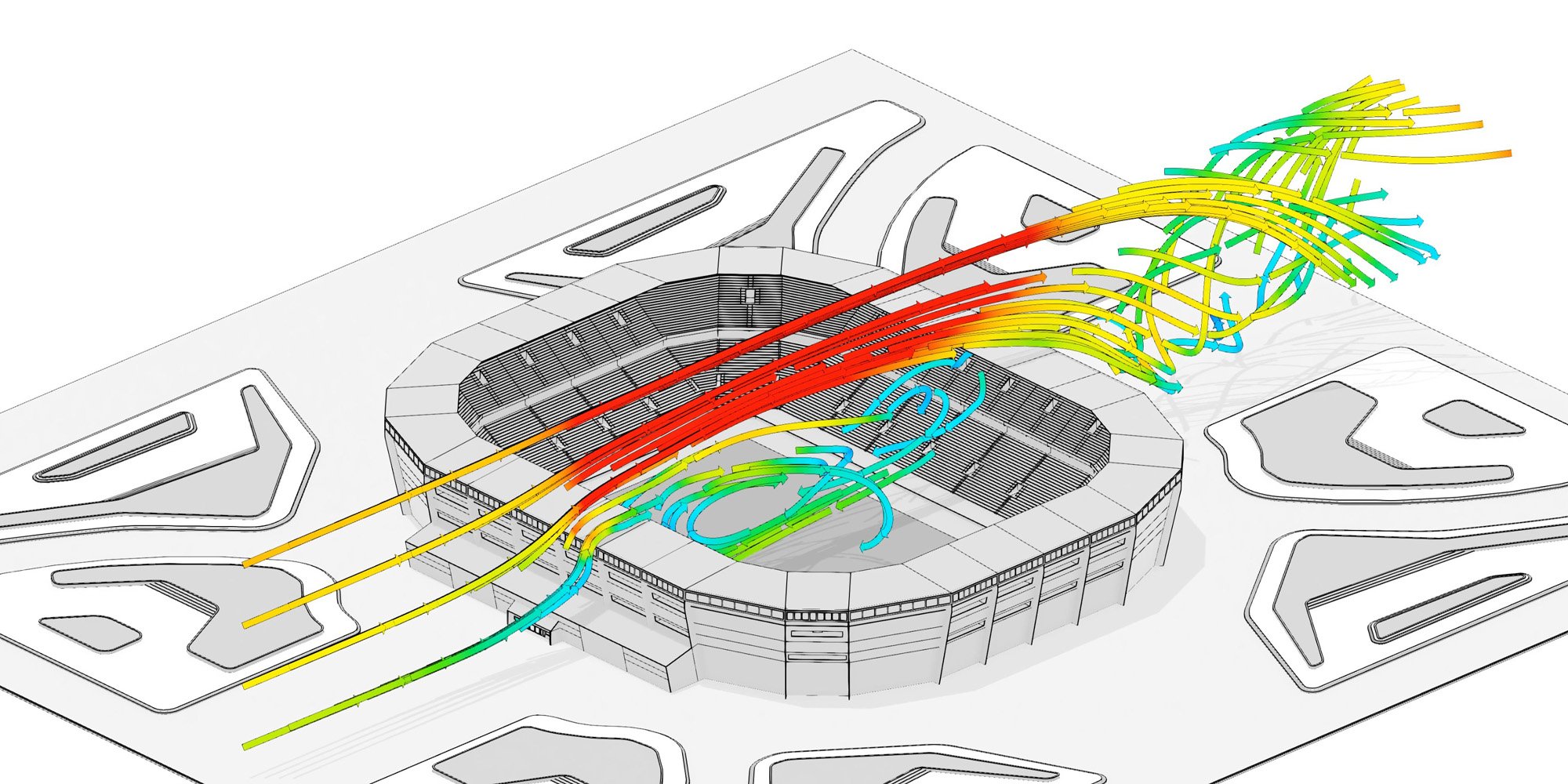
Figure 3: Analysis showing the velocity of breezes around and through the same small lot scenario. The path oof the breeze and the volume of air exchanged with the exterior, significantly reduces the internal temperature of the dwelling. 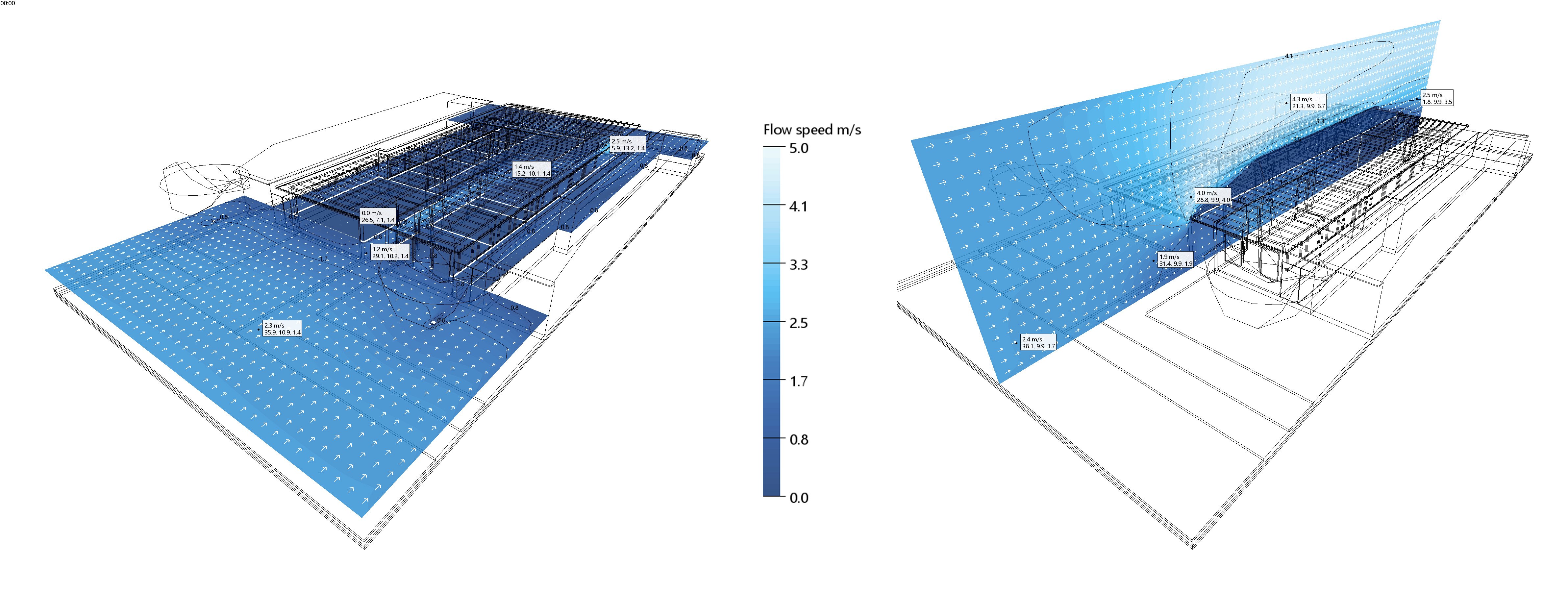
Toward a Cooler Future
Heat is not just a summer inconvenience—it’s a systemic challenge that demands systemic solutions. As Australia adapts to a warming climate, temperature must become a standard metric in urban planning and design.
With the right tools and mindset, we can build cities that protect people, preserve ecosystems, and perform under pressure. Urban Vector is proud to be part of that mission.
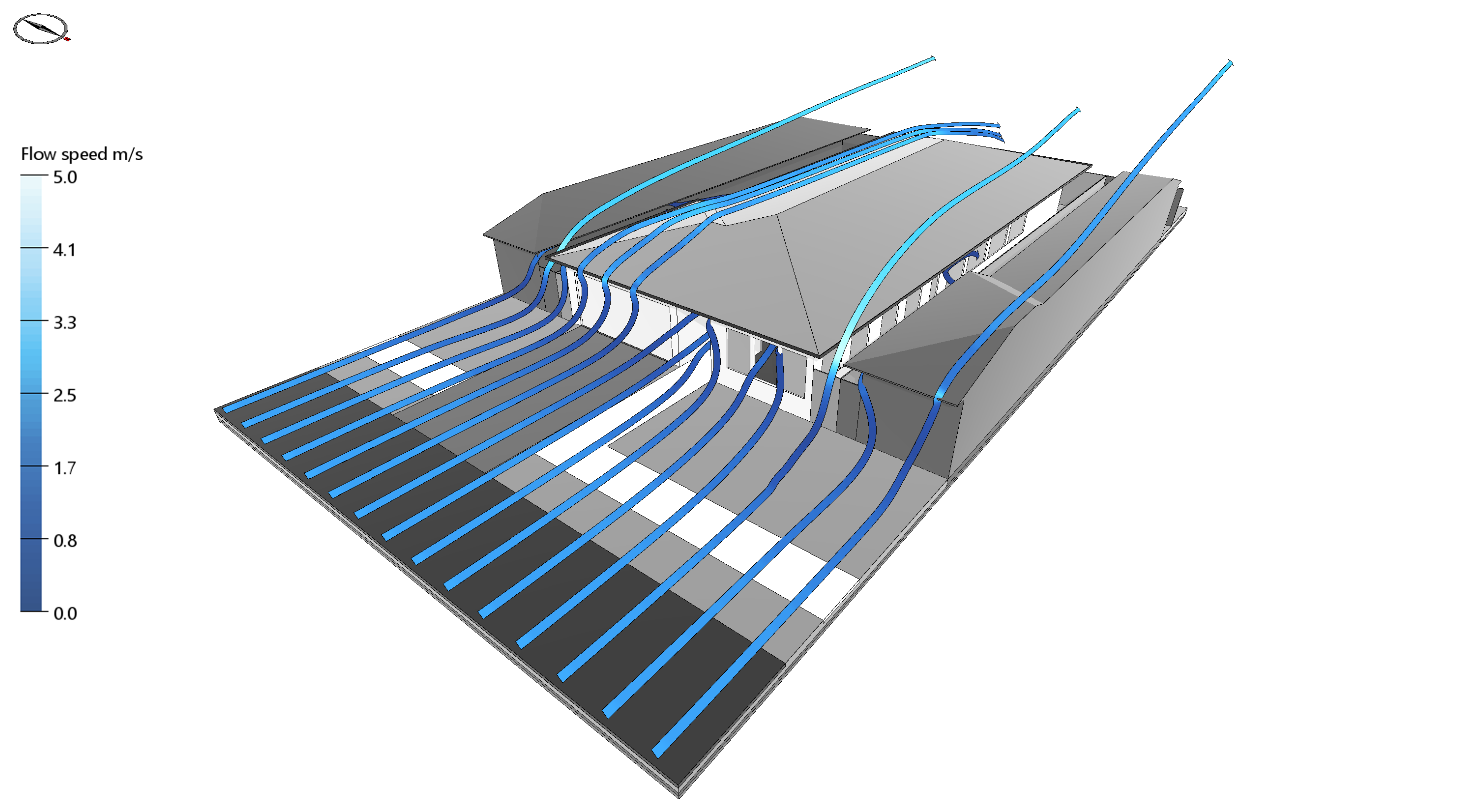 Figure 4: Analysis showing the velocity of breezes around and through the same small lot scenario. The path of the breeze and the volume of air exchanged with the exterior, significantly reduces the internal temperature of the dwelling.